

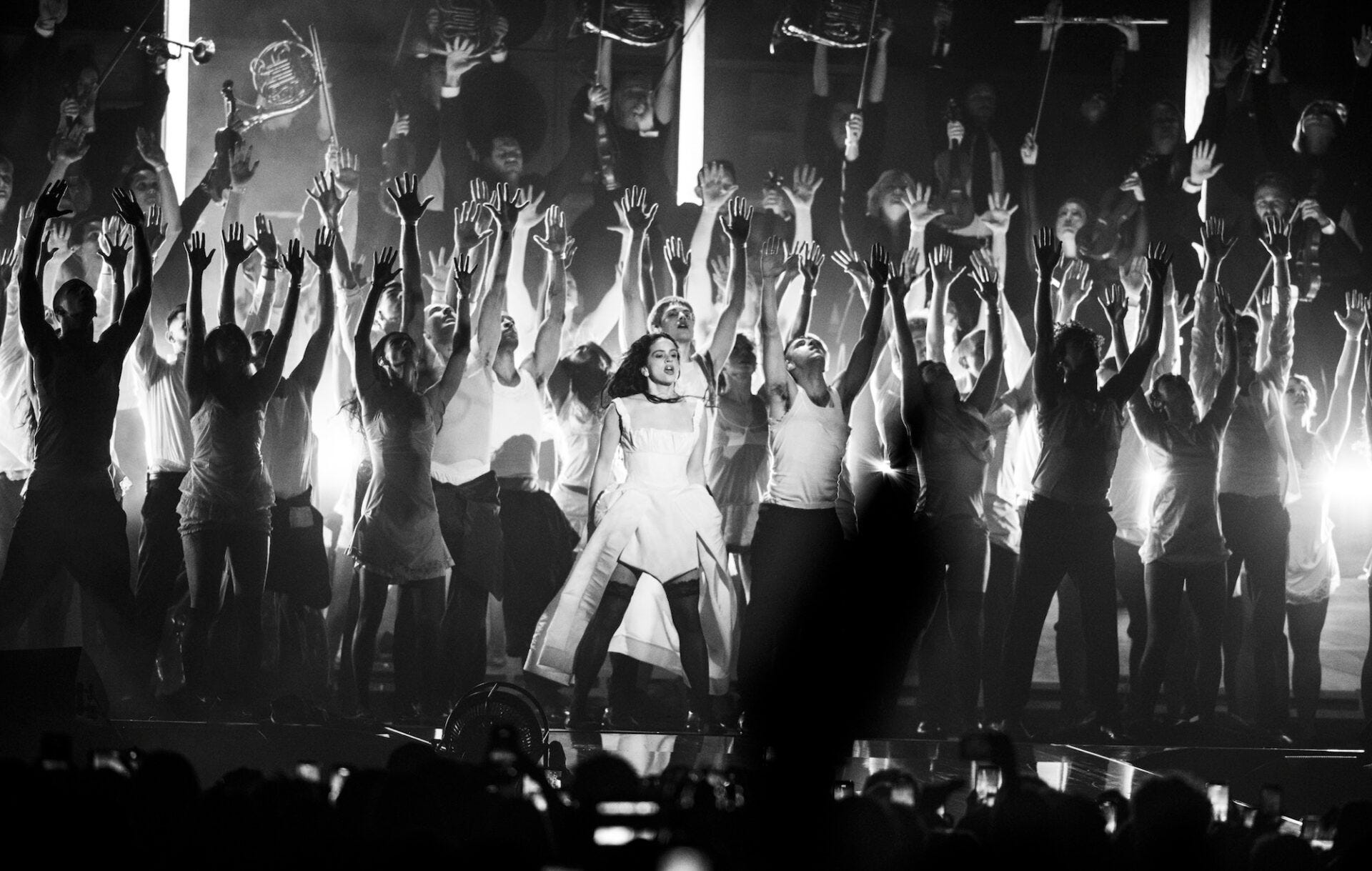
Nestled in the frenzied crowd at Turnstile’s hope-inducing Lollapalooza set was a couple wearing matching, cobalt blue t-shirts with big white letters that read: “I CARE.” Of course, this is a nod to the band’s song of the same title. But it could’ve also been tattooed on Rosalía’s forehead during the promo run for her 2025 album, LUX.
I don’t believe Rosalía’s studied approach to music started with LUX. For those familiar with the lore, Rosalía’s breakthrough album, El Mal Querer, was her graduate thesis at Barcelona’s Catalunya College of Music. While there for university, she studied flamenco and music production.
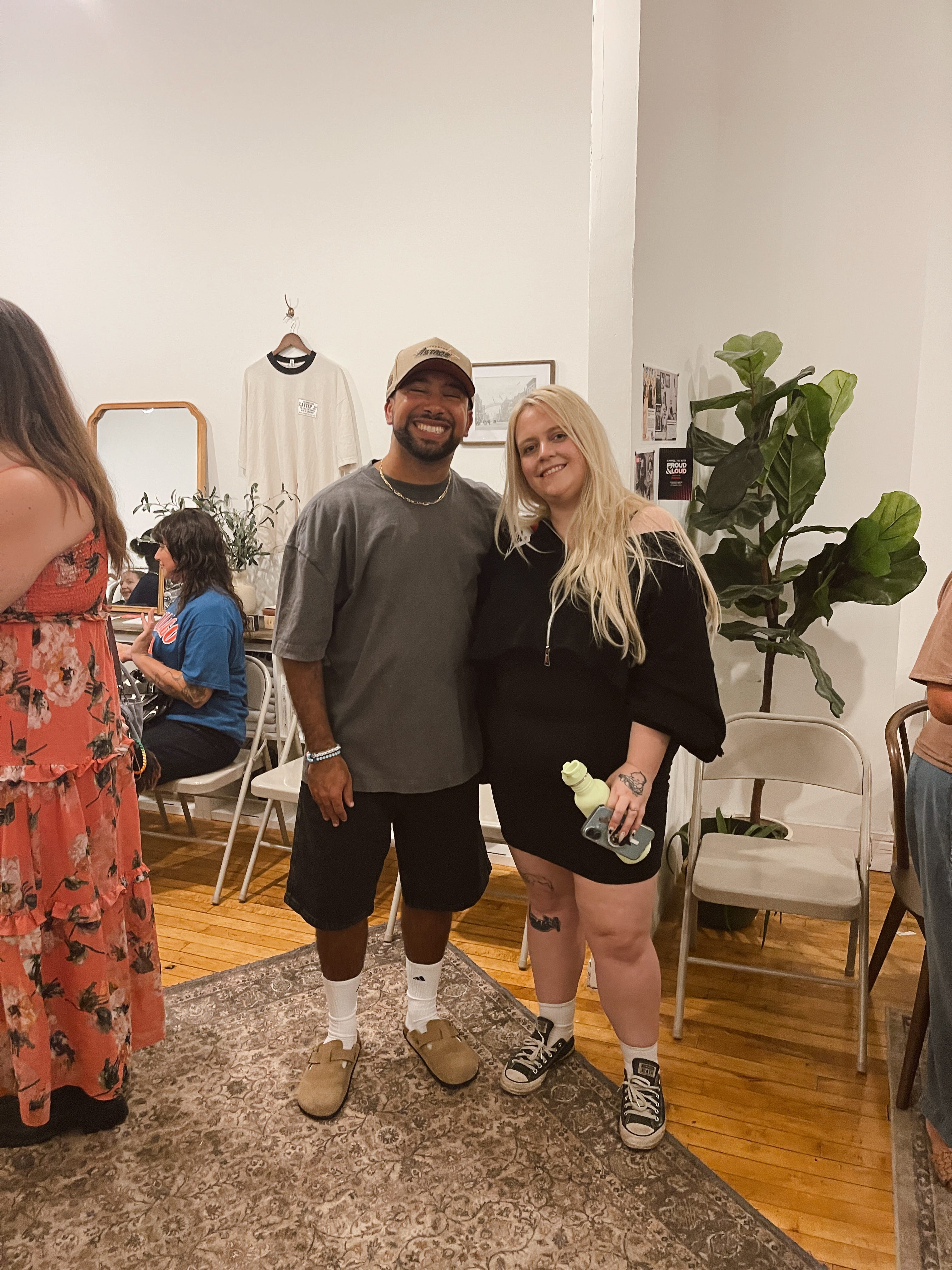
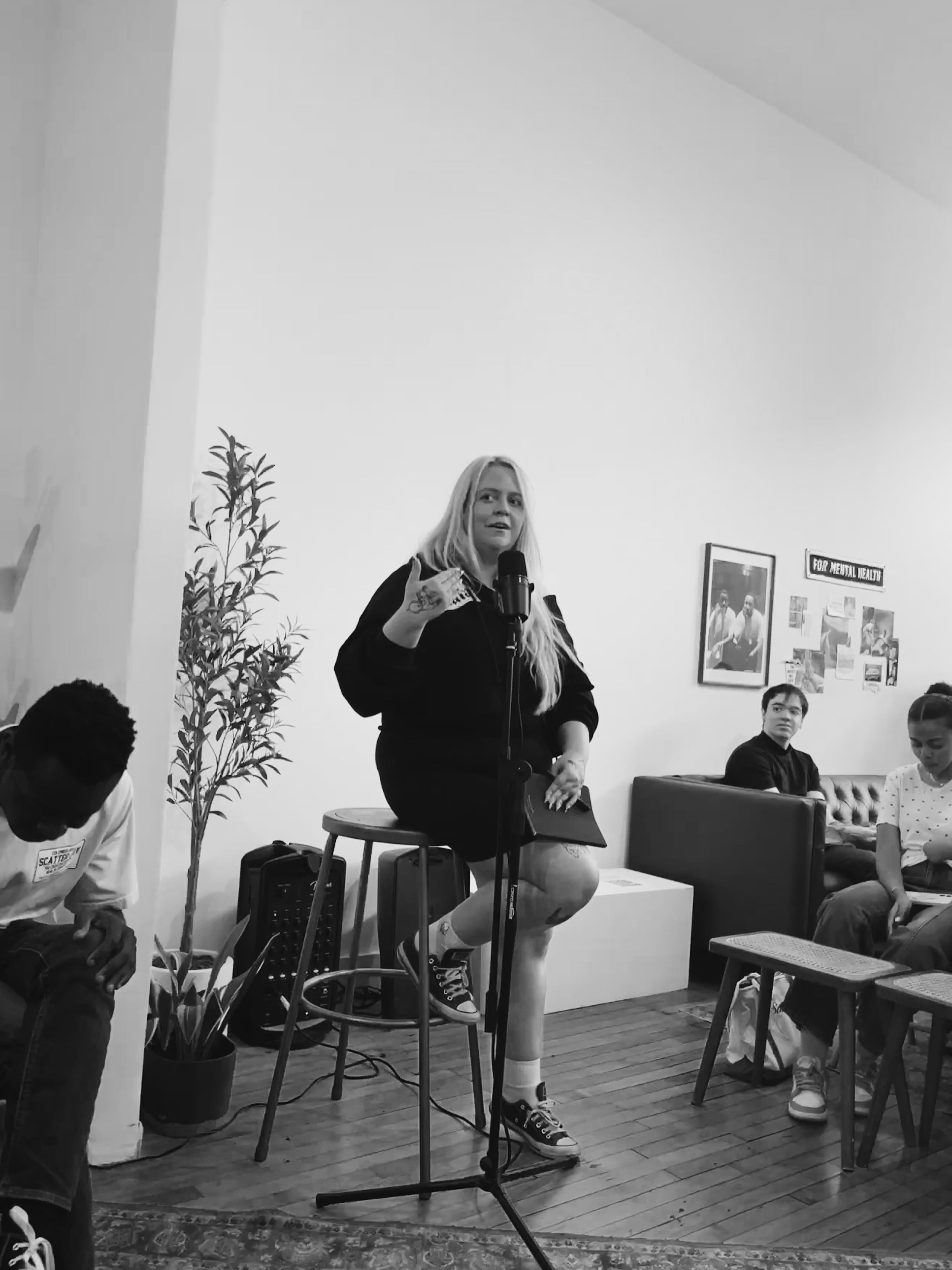
As rachel moss invited us to consider during last night’s Album Club, LUX shares similarities with El Mal Querer in that it wasn’t an afterthought, but rather a wholehearted academic and artistic pursuit.
There’s much to be made of the 13 different languages that Rosalía employs across LUX. It’s impressive and important to note that it’s not cheaply done, as several people stated last night. Years of research led Rosalía down a rabbit hole of learning about female saints from around the globe, and she used these languages to invite us into their worlds.
Rosalía lends humanity to these saints, and in turn, she celebrates the humanness in herself and each of us. “The more there’s imperfection, the more human it is, there’s more beauty, there’s more of a story,” Rosalía told NPR. “There’s cracks in the lyrics, there’s cracks in the music, and Leonard Cohen says that’s how the light gets through.”
One of the hallmarks of humanity is that there’s always more to learn. LUX, for example, was among my favorite albums last year. Upon first hearing it, I knew Rosalía had done the thing she set out to do. She created an arresting body of work that demands your attention. But at that point, I was just going off how the album sounded. Since then, I’ve watched and read interviews about LUX. I’ve seen some of the music videos and performances. But that’s just the tip of the iceberg. There’s so much more underneath.
I want to sit with the lyrics and read the English translations. I want to understand which language is which and learn more about the saints they’re connected to. I want to know this album inside and out because Rosalía didn’t just make LUX for us to listen to and enjoy; she invited us to research alongside her.
Rosalía has seen the world, and she wants us to see it, too. Not for the sake of becoming more well-traveled, but to better understand ourselves. “I exist in the world and the world exists within me,” she declares. In other words, she is one with all around her. If we believe the same for ourselves, what does that change about how we engage with the world? With each other?
I return to care—or as Rosalía puts it: “Finding ways to understand the other, and even to speak to them in their own language.” This search requires patience and presence. It doesn’t happen at the speed of algorithms and brands. Care is a garden, tended to over time.
For updates on future Album Club meetings, follow us on Instagram!