

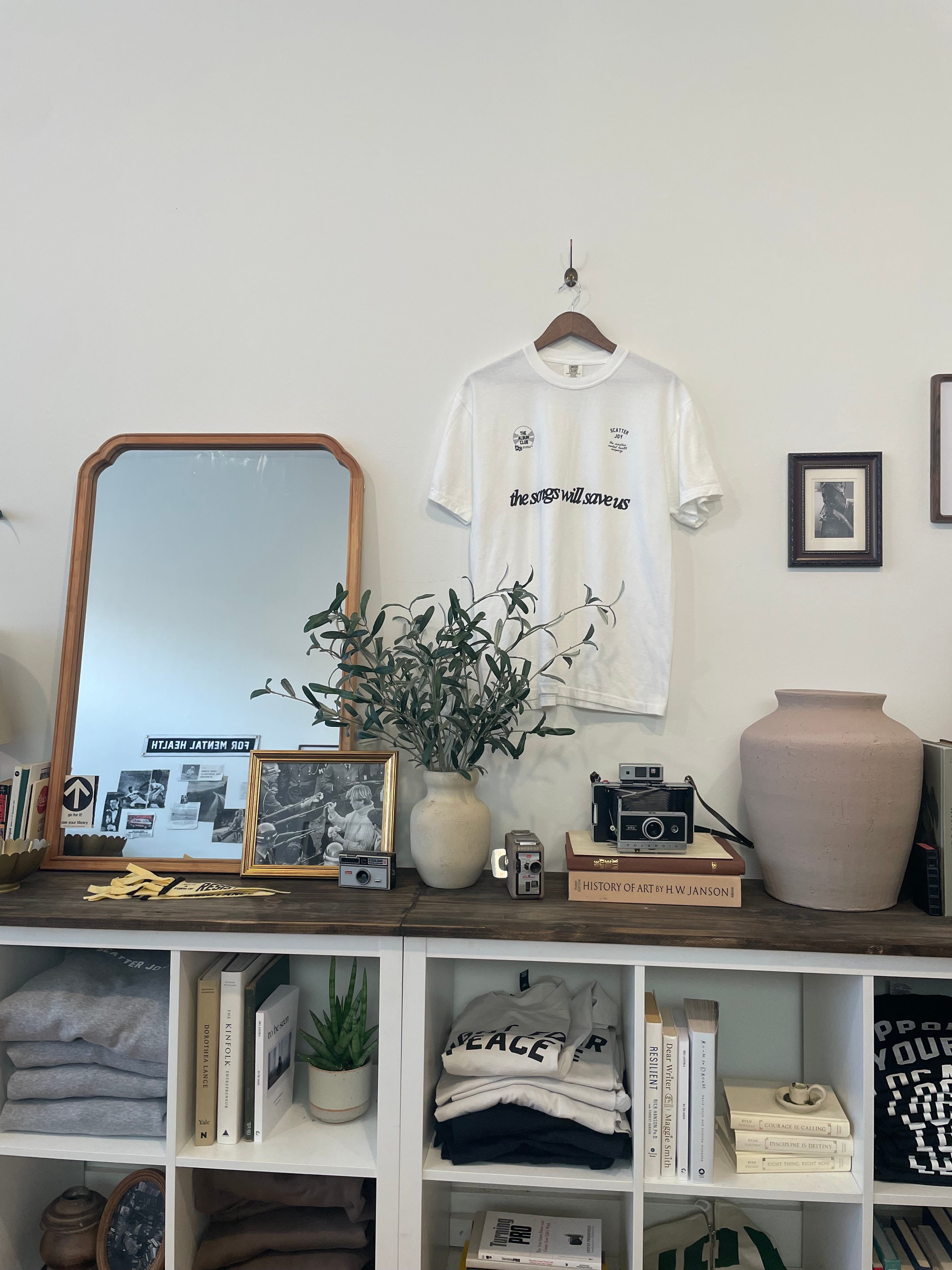
BIG NEWS! Album Club T-Shirts are now available online. The Songs Will Save Us Tee is a collaboration with The Scatter Joy Project, and 100% of profits help fund Scatter Joy’s creative mental health mission.

“The songs will save us” isn’t just a tagline; it’s a recognition that music has met many of us in our darkest times. It’s also a belief that, when we gather around things we love — in this case, music — we gain a better understanding of the world we want to live in and consider how we might make it more of a reality in the here and now.
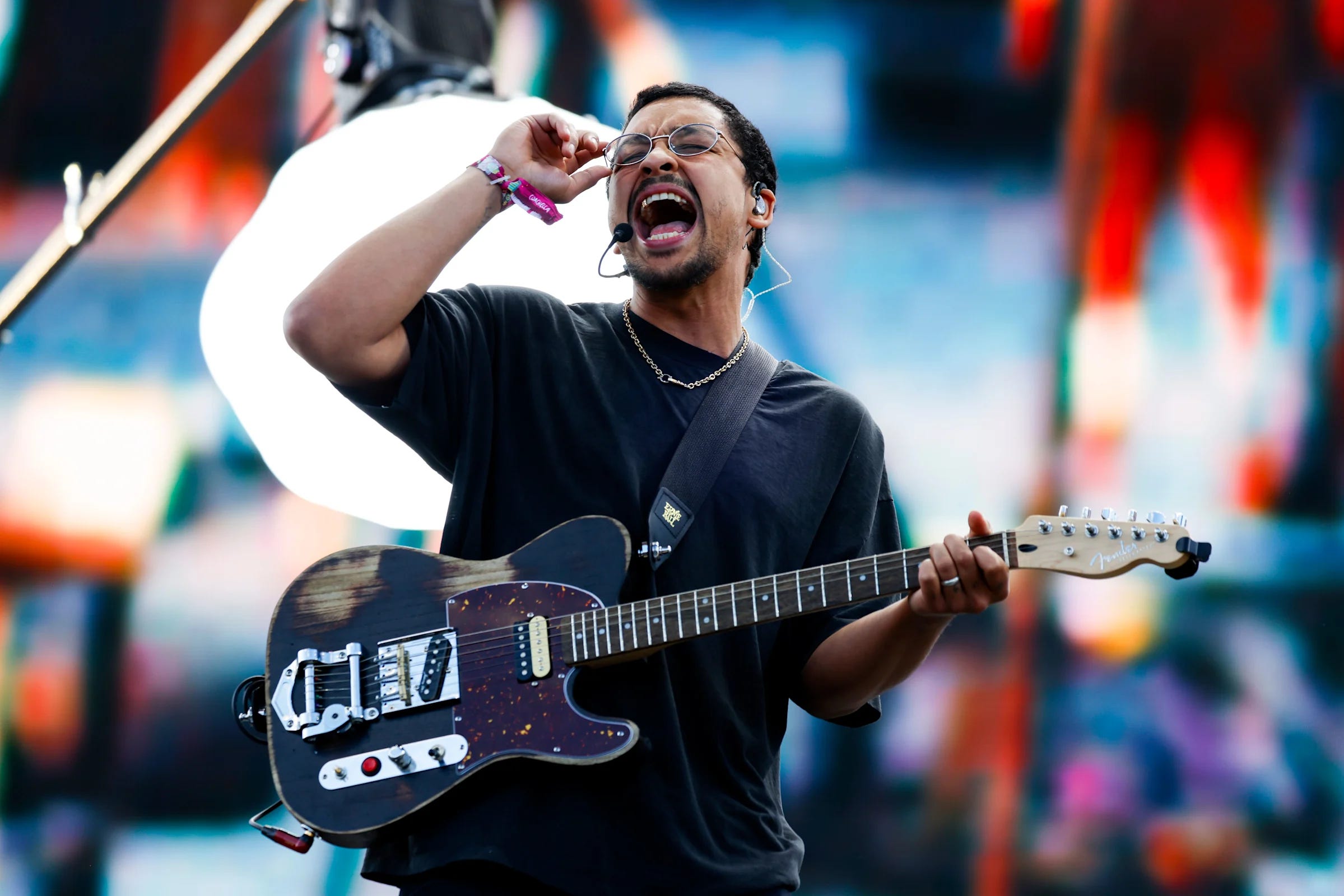
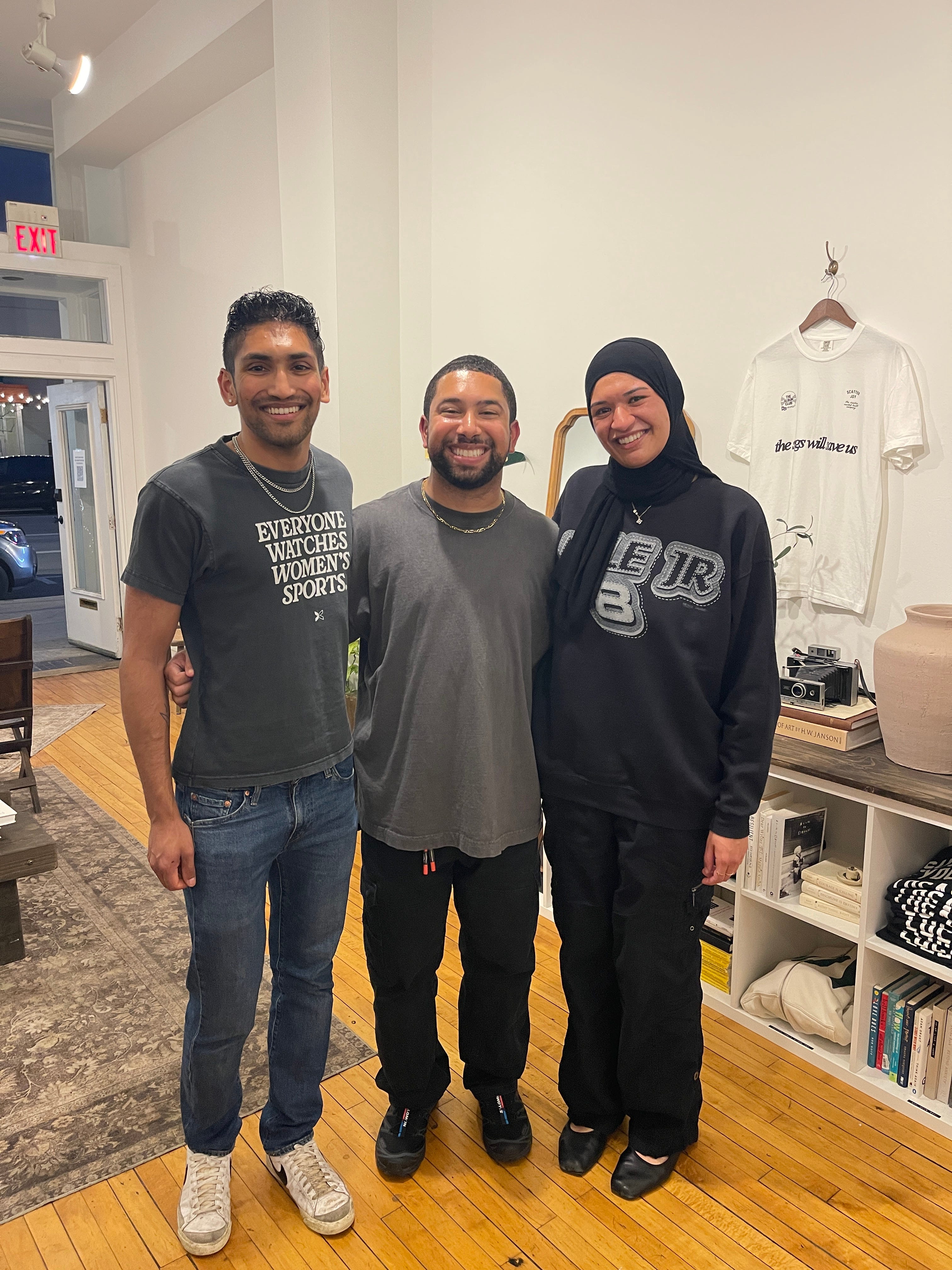
Selfishly, I was super excited when I saw multiple people suggested Dijon’s Baby for The Album Club. It was one of my favorite releases from last year and an album that I would’ve forced a discussion on even if nobody recommended it. But thankfully, my friend Heba was down to lead the conversation and did so beautifully. Her questions centered not only on her own experience with the album, but also how others experienced it.
I remember sitting at the Jersey Shore the weekend of my little brother’s 21st birthday when Baby first came out. I snuck it on while we relaxed at the dock, but Dijon’s second studio album isn’t necessarily background music. Baby is abrasive. It’s jarring at times. The production, and even Dijon’s voice, aren’t made to be passive; they’re geared toward disruption.
This is fitting as Baby is an ode to Dijon’s firstborn, who shares the same name as the album. I’m not a parent, but I know that having a child is beautifully disruptive. Not to equate the experiences, but even having a cat, I know that I can’t always plan for the type of love he’ll need or when he’ll need it. Sometimes, my cat throws up, and I have to spring into action—or I can be texting, and next thing I know, he’s nudging my phone out the way, so I can give him my full attention.
For all of its staggers and jolts, Baby mirrors the zigzags of loving what’s yours. From what I’ve collected about parenthood, it’s messy; it’s experimental. You’re trying things as you go. What worked one day might not work the next. We talked about Dijon’s live performances and how he and his band create different arrangements, often transforming songs from their original recordings to where they’re sometimes unrecognizable. Such is raising not only one child, but “Another Baby” as Dijon foreshadows on the album’s second track.
At times, Baby is loud and eclectic, but so is life. And there are points when you hit a groove. “Baby, I’m in love with this particular emotion / And it’s sweet, you in this particular motion.” Or there are moments when it’s quiet and sweet like Dijon on “loyal & marie.” But the point is that love doesn’t take one shape. As Heba summed up so well, “Perfection does not mean it’s perfect.”
For many of us, we don’t come to Dijon for a “vibe.” We come to his music because it reminds us of life. He gives voice to the tension we feel. And when he yells, we remember how we haven’t yelled in a while, and maybe it’d be good to let it out. Maybe there’s something on the other side of all this. A payoff. A “Kindalove” that can’t be put into words, so all you have left is exclamation points !!!
For updates on future Album Club meetings, follow us on Instagram!
Even if you’re unable to join The Album Club in person, let’s continue the conversation in the comments. Feel free to answer any or all of the questions that Heba outlined for last night’s Baby discussion:
Is there a moment where the “mess” on Baby feels truer to you than a polished version of the album ever could?
If you were going to pick a song from Baby that represents you, what would it be & why?
When you listened to Baby for the first time, did listening to the album bring you back to yourself or was it a tribute to someone else?
Where did you notice intimacy on this album? Did it compare to a traditional understanding of intimacy, or was it different?
May or may not be buying the t-shirt very soon!! Love that slogan. “yamaha” is my ‘Baby’ song because it sounds like holy rapture, which is what any socializing unburdened from capitalism and time can feel like, and i regularly crave that. Not thematically overlapping with the lyrics but it’s my truth!