

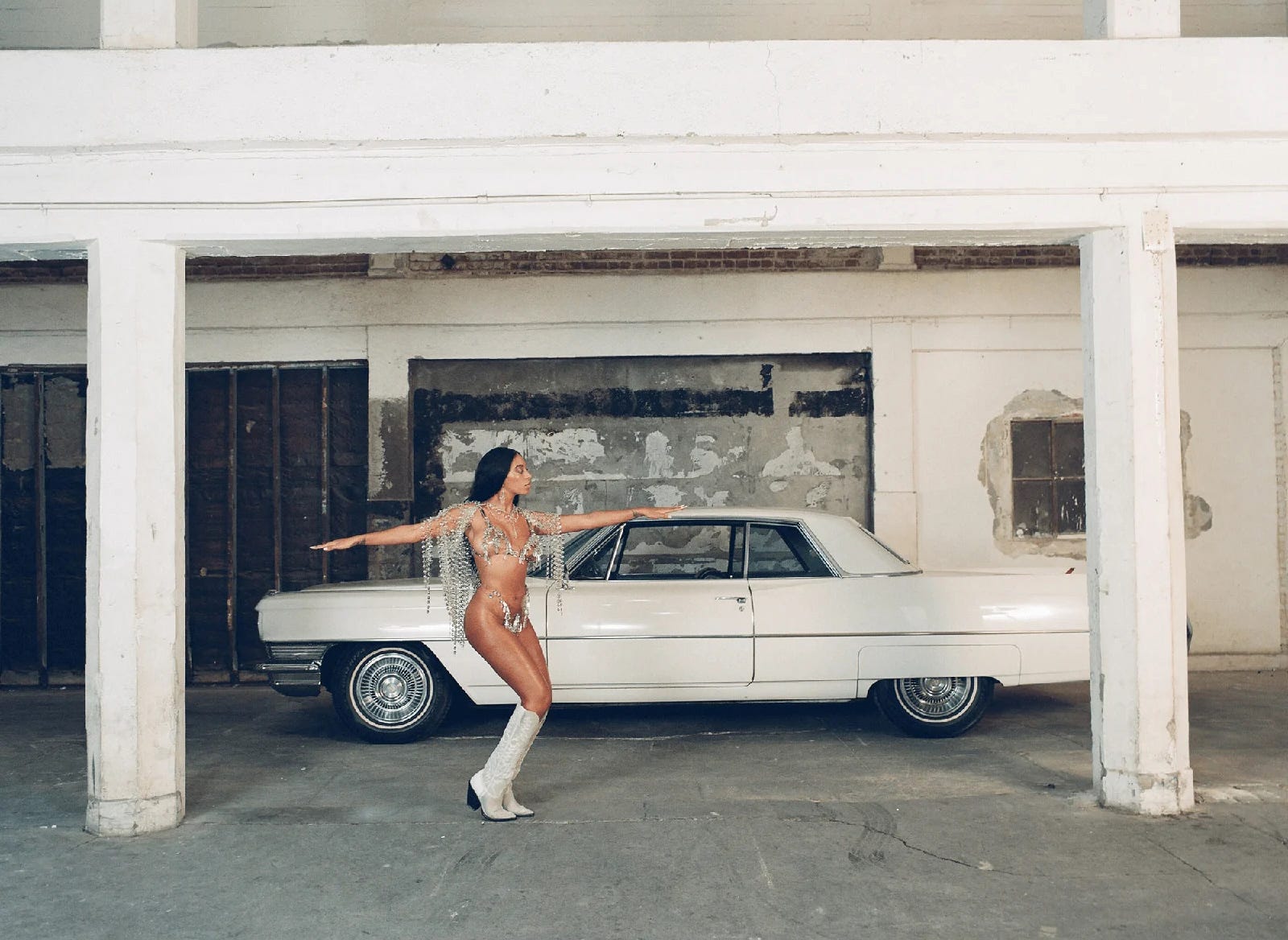
When I Get Home begins with Solange repeating, “I saw things I imagined.” Within Black communities, repetition is a means of survival. My homie, Michaela, who runs Nu Nu Vintage and guided our discussion on Solange’s fourth studio album, shared how important the oral tradition is for retaining Black histories, pastimes, and cultural memory. We are a storytelling people, and it’s these stories that help us better understand who we are.
When I Get Home centers Solange’s hometown of Houston, Texas. She takes a multilayered approach to this homage, invoking certain sounds, flows, samples, and visual depictions. Ahead of our discussion, we watched Solange’s When I Get Home short film, which serves as a companion to the album. With all of us huddled inside Scatter Joy’s High Street space, we traversed through scenes of Black cowboys, slabs, iced-out teeth, and spaceships. The specificity of these images and the project’s focus makes room for those who dare to sit with their own sense of home.
Houston connects time in really interesting ways, bridging the past, present, and future through lifestyles and landmarks. While Black cowboys invoke a seemingly bygone era that is still here and often overlooked, Houston is also home to NASA’s Lyndon B. Johnson Space Center. In the film, Solange depicts the city’s connection to space travel with a woman dancing around a spaceship before she carries it across the desert. Through these examples of cultural identity, Solange reinforces the longevity and inevitability of Black people. We’ve been here, we’re still here, and we’re not going anywhere. This is art as defiance, reclamation, and proclamation.
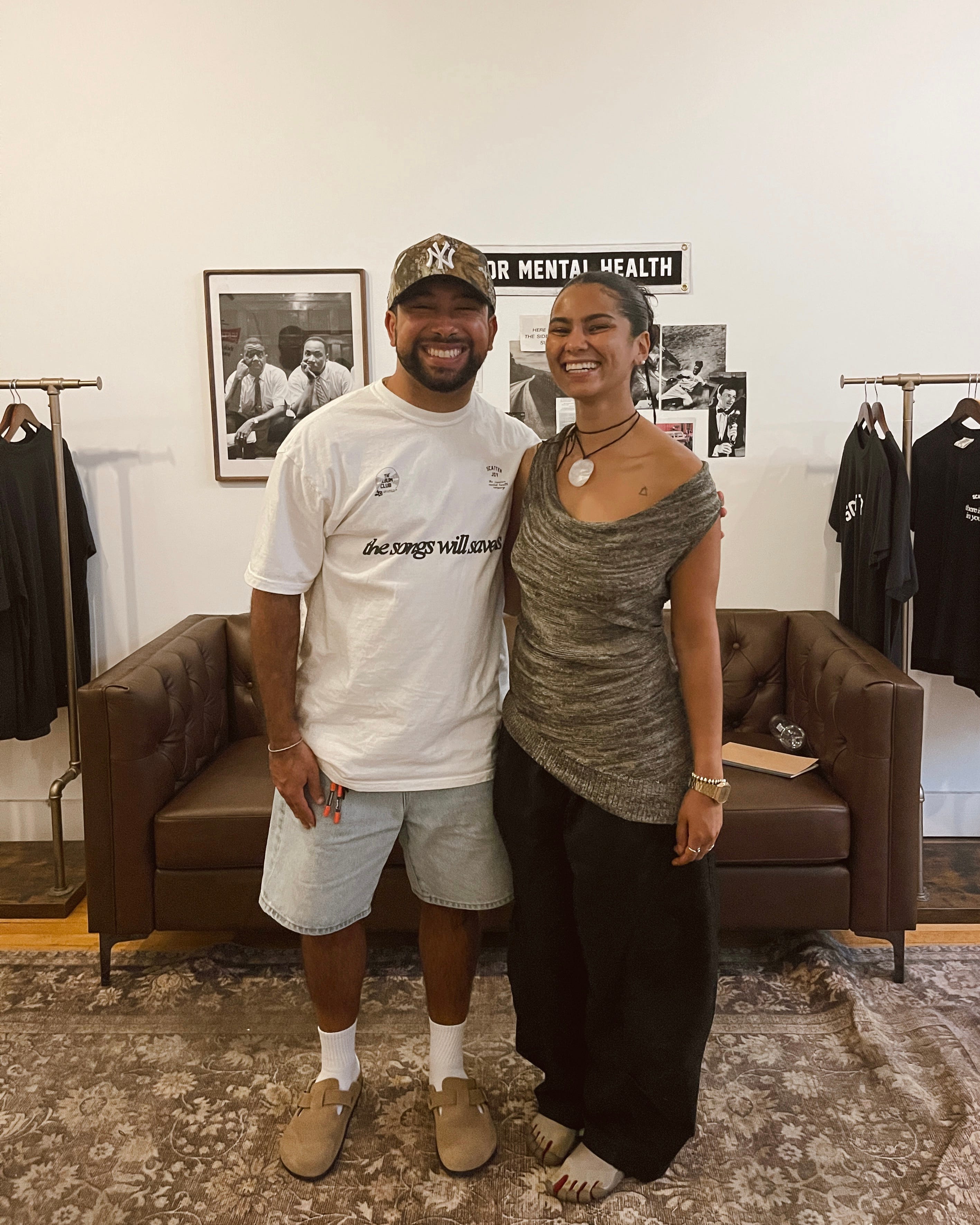
We repeat these truths not only to remember, but also to feel. Repetition is one of the key devices often employed in Black churches. From sermons to worship music, meditations become incantations that invite a flood of emotions. Ayana Mathis, who spoke with Solange for The New York Times in 2018, wrote about the artist’s experience of watching fellow churchgoers “catch the spirit.” She described Solange’s reaction as fascination mingled with fear. “Every person who wishes to create art that has meaning must face the Holy Ghost, metaphorically at least,” Mathis added, “she must struggle with whatever she feels called upon to create, the thing that wishes to inhabit her.”
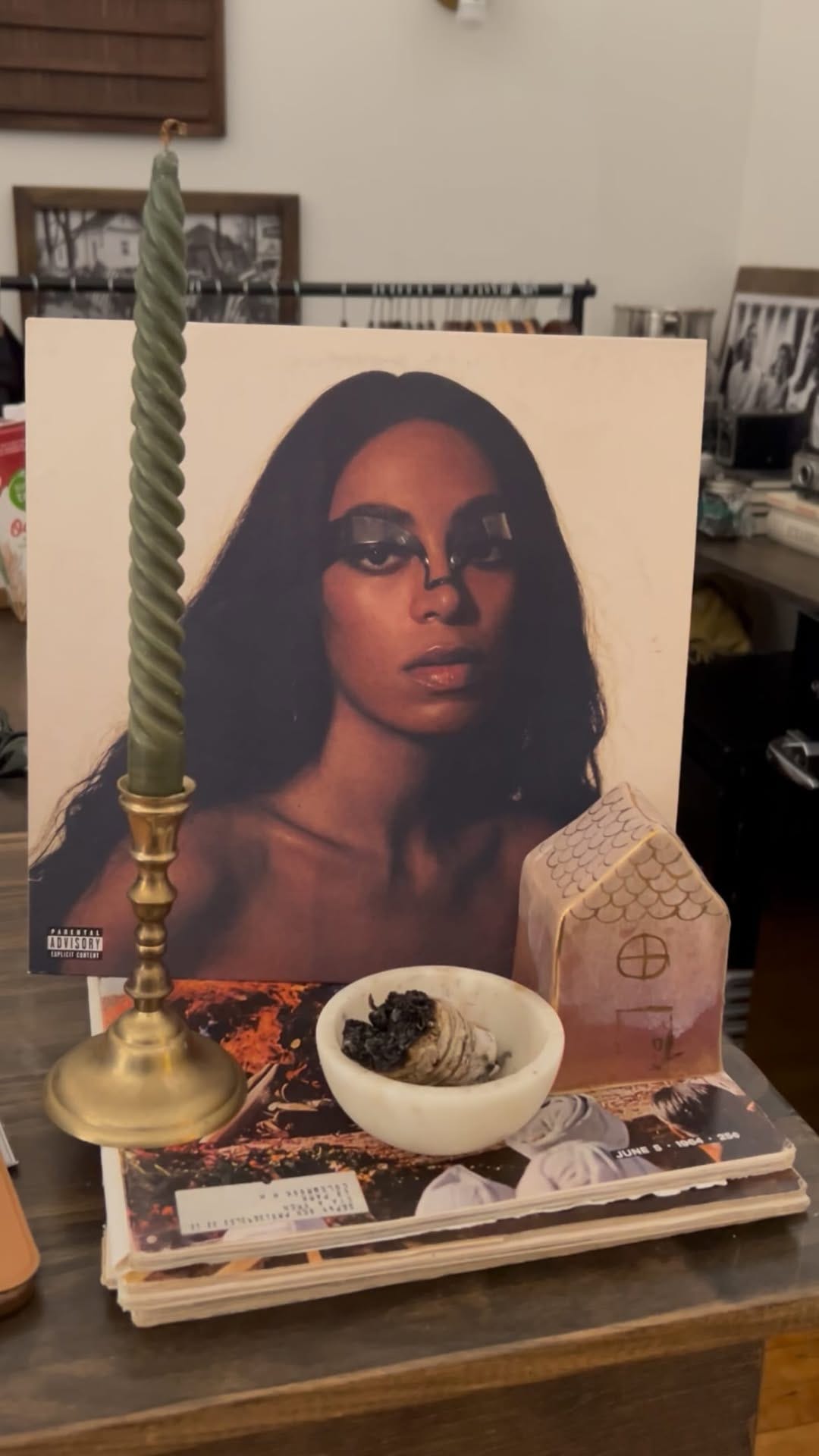
As Solange repeats those opening lines on “Things I Imagined,” the song utilizing an old music technique that pianist Christophe Chassol describes as “speech harmonization,” I look around the room and see dreams that have come true. “I saw things I imagined.” Each time she says it, I look back and remember. “I saw things I imagined.” I think about Zach telling me he wanted to figure out some kind of gathering I could host at Scatter Joy. “I saw things I imagined.” I smile because we made it so. All of us daring to gather around what we love, facing our fears with a sense of curiosity about what this all could become. And what we know now is, it could become home.
For updates on future Album Club meetings, follow us on Instagram!
Even if you’re unable to join The Album Club in person, let’s continue the conversation in the comments. Feel free to answer any or all of the questions that Michaela outlined for last night’s When I Get Home discussion:
How did this project make you feel? What parts moved you? What didn’t you like? Did you like it on the first listen or did it take a few spins?
Why do you think repetition is used so much throughout the album? (repeated phrases, sounds, movements, visuals, etc.) Did it feel meditative? Hypnotic? Affirming? Haunting?
How does the project collapse the distance between past, present, and future?
How does spirituality become a home for people disconnected from place, lineage, or certainty? How does When I Get Home explore that idea?
alex you're making me have withdrawals from an album i listened to in full TWO days ago. such a considered, wonderful piece. there has always been something connected and spiritual about her work. i love that you didn't ignore that root and built on it as a reading. i say it all the time but you're so good at this.
i moved to Houston the year this album came out and one night after an outing, i put the album on my drive back to my place and "Beltway" started as rode down Beltway 8. i rolled all of my windows down to the fall air and it was honestly the most magical memories that i have from living there. Solange truly made an incredible work of art with this one.